Roof Types
Find yours below — each one leaks in its own way and gets its own approach.
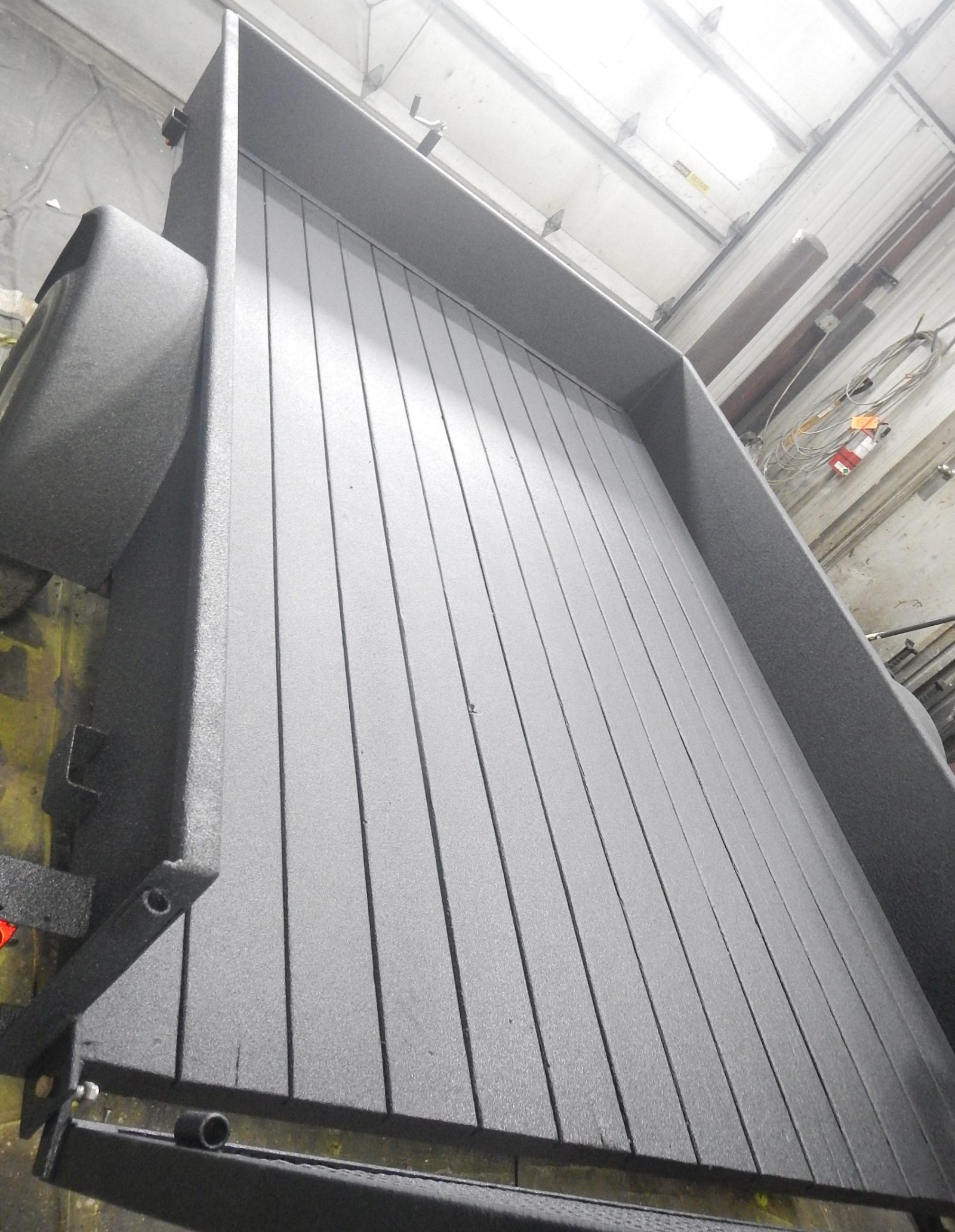
The Rounded Metal Roof
If your home was built before roughly the mid-1970s it probably has the classic bowstring roof — a single arched sheet of metal running the length of the home, with the edges rolled into the sidewall trim.
These are actually good roofs for coating. There is very little to go wrong in the field of the sheet, and the leaks are concentrated at the ends, at the vent penetrations, and along the edge trim. The curve is not a problem for a sprayed membrane the way it is for anything applied in sheets or rolls.
The one thing to watch is how many coats of aluminum roof coating have accumulated. Ten or fifteen years of annual recoating builds a thick, brittle layer that has to be scraped back to something sound.
Spec: Super Orange Cleaner wash, remove all loose coating, 7001 Primer, OR-80SLM at 40–50 mil or Alasta Seal, with a stripe pass at end caps, vents, and both edge trims.
The Double-Wide Center Seam
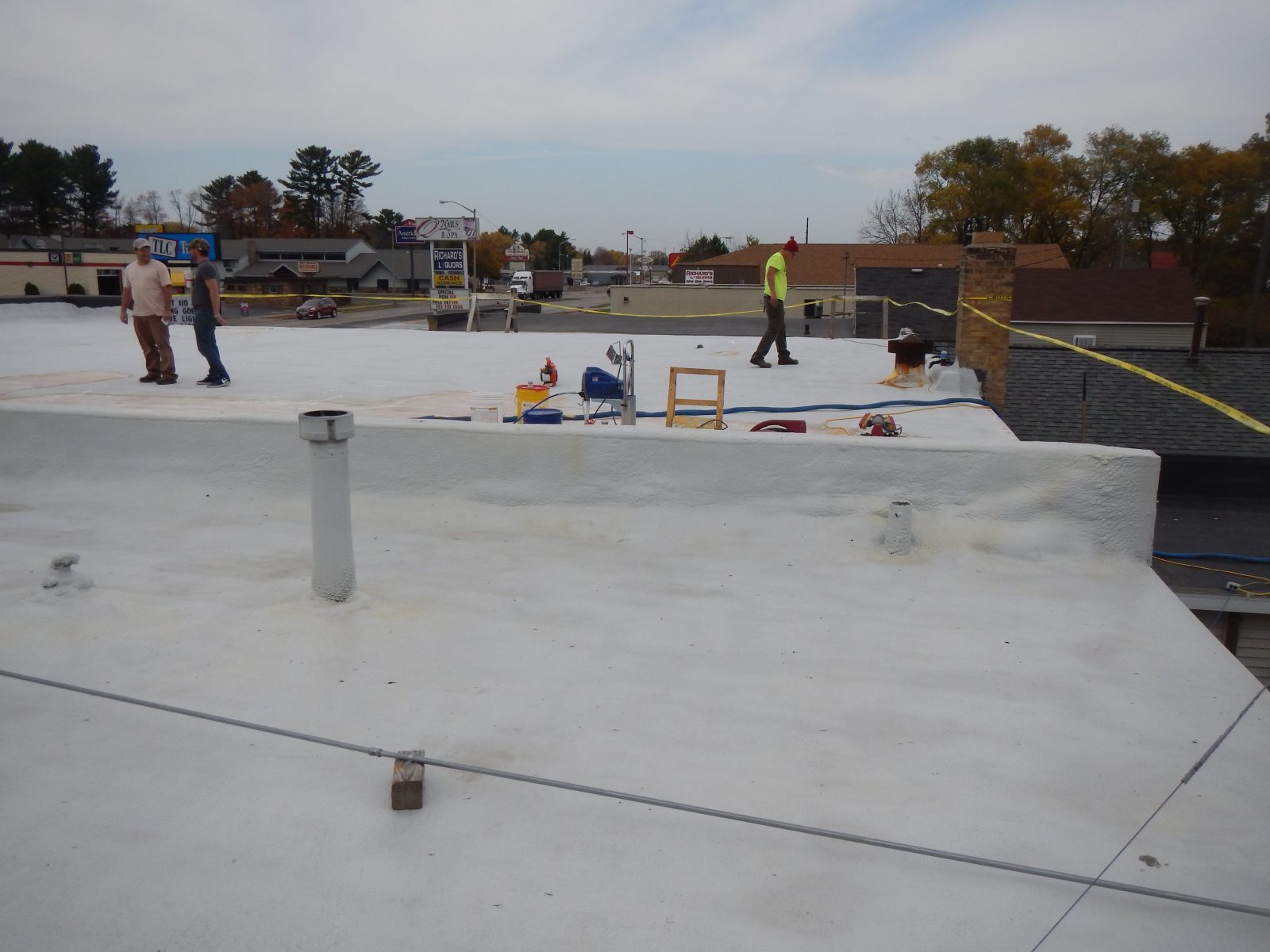
When a double-wide is set, the two halves are joined on site and the roof joint is closed up with a cap, some fasteners, and sealant. That joint is the number one leak location in manufactured housing, and the reason is straightforward: the two halves are separate structures that settle and move independently on their piers.
Every seasonal cycle works that joint a little more. Sealant that is doing its job in year one is a hard bead with a hairline crack by year eight, and the water it lets in tracks along the ceiling and shows up somewhere else entirely.
A sprayed membrane is well suited to this because it bridges the joint elastically rather than filling it rigidly. When the halves move, the membrane stretches across the gap instead of tearing along it.
Spec: Clean and prime the seam and 12" either side, extra stripe pass of Alasta Seal or OR7K over the joint, then the full roof membrane over the top of it while the stripe pass is still in the recoat window.
Flat & Low-Slope Metal Single-Wides
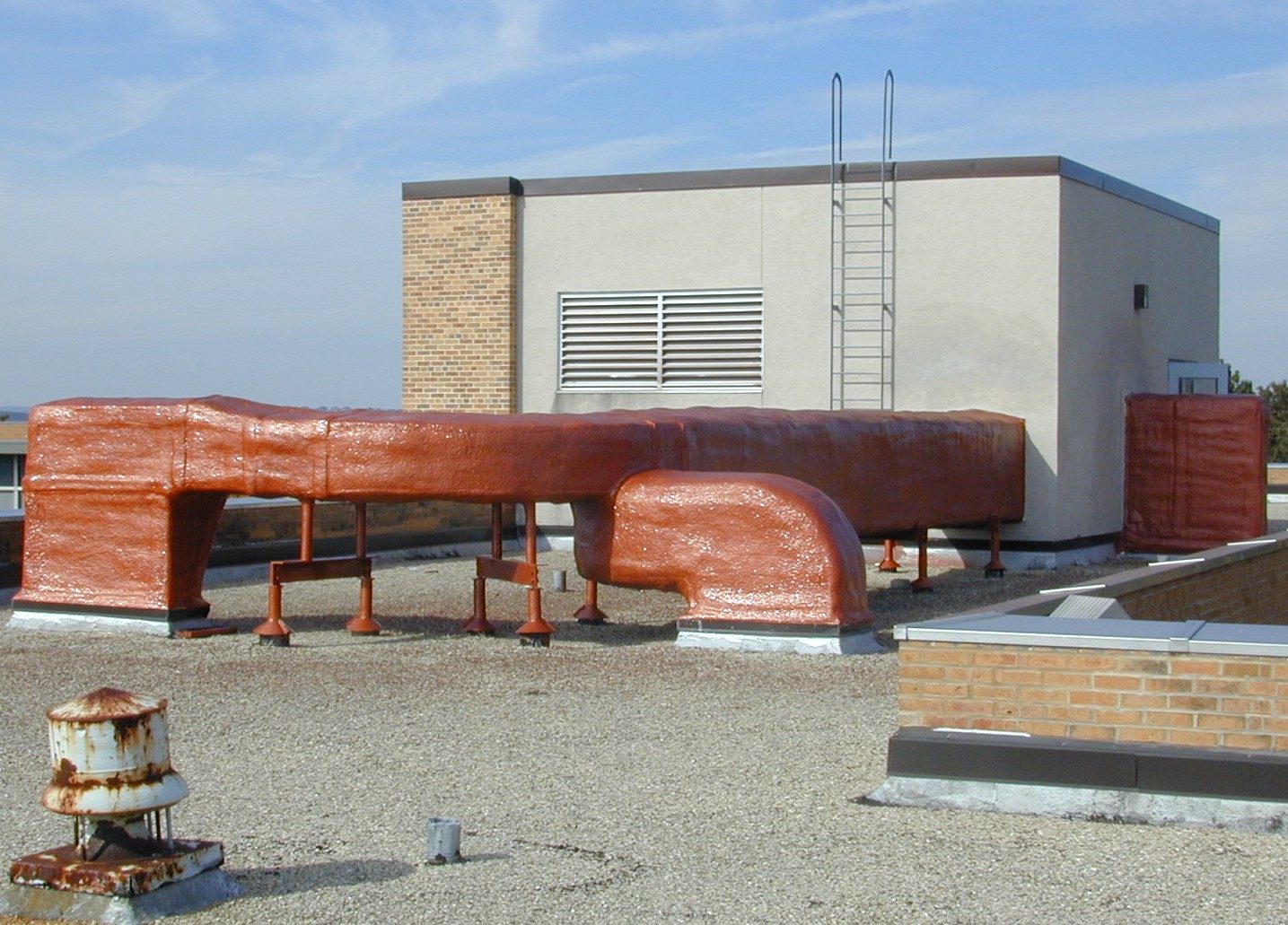
Newer single-wides typically have a flat or nearly-flat metal roof with a slight crown. These hold water and debris far longer than an arched roof does, and the fasteners are exposed — screws through the panel into the framing, each with a washer that hardens and cracks over time.
Ponding is worth checking before anything is sprayed. If water sits in a low spot for days after a rain, that spot deserves attention first, whether that means correcting the fall or accepting that the membrane needs to be thicker there.
Spec: Wash, replace any backed-out or spinning screws, 7001 Primer, OR-80SLM at 50 mil with a stripe pass over every fastener line and lap. Alasta Seal where the roof structure is particularly light and flexible.
Rubber & Membrane Roofs
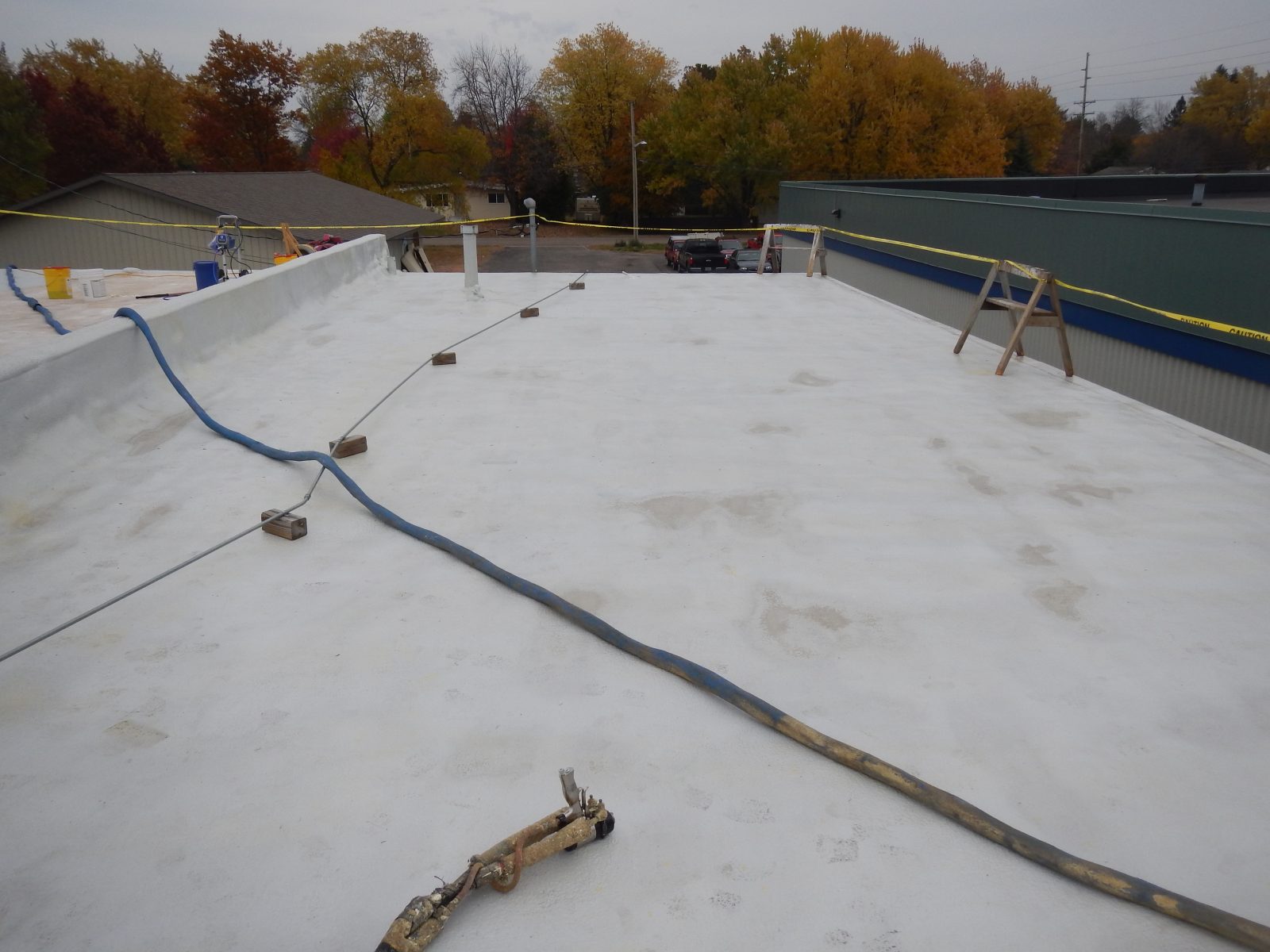
Manufactured homes built in the last couple of decades often have a rubber or synthetic membrane roof — usually EPDM or TPO stretched over a wood deck and sealed at the edges and penetrations.
These age in a specific way. The sheet itself often stays intact while the surface goes chalky and the seams and flange sealants let go. A new coating applied over that chalky surface will not stick, which is why washing and priming are decisive here.
One caution: some older rubber roofs shrink over time and pull at the edges. If the membrane has pulled loose from the trim, that has to be addressed as a repair before anything is sprayed over it.
Spec: Super Orange Cleaner wash to remove chalk, dry, 7001 Primer full-surface, Alasta Seal with a stripe pass at every seam, flange, and edge. Always test-patch an unfamiliar aged membrane first.
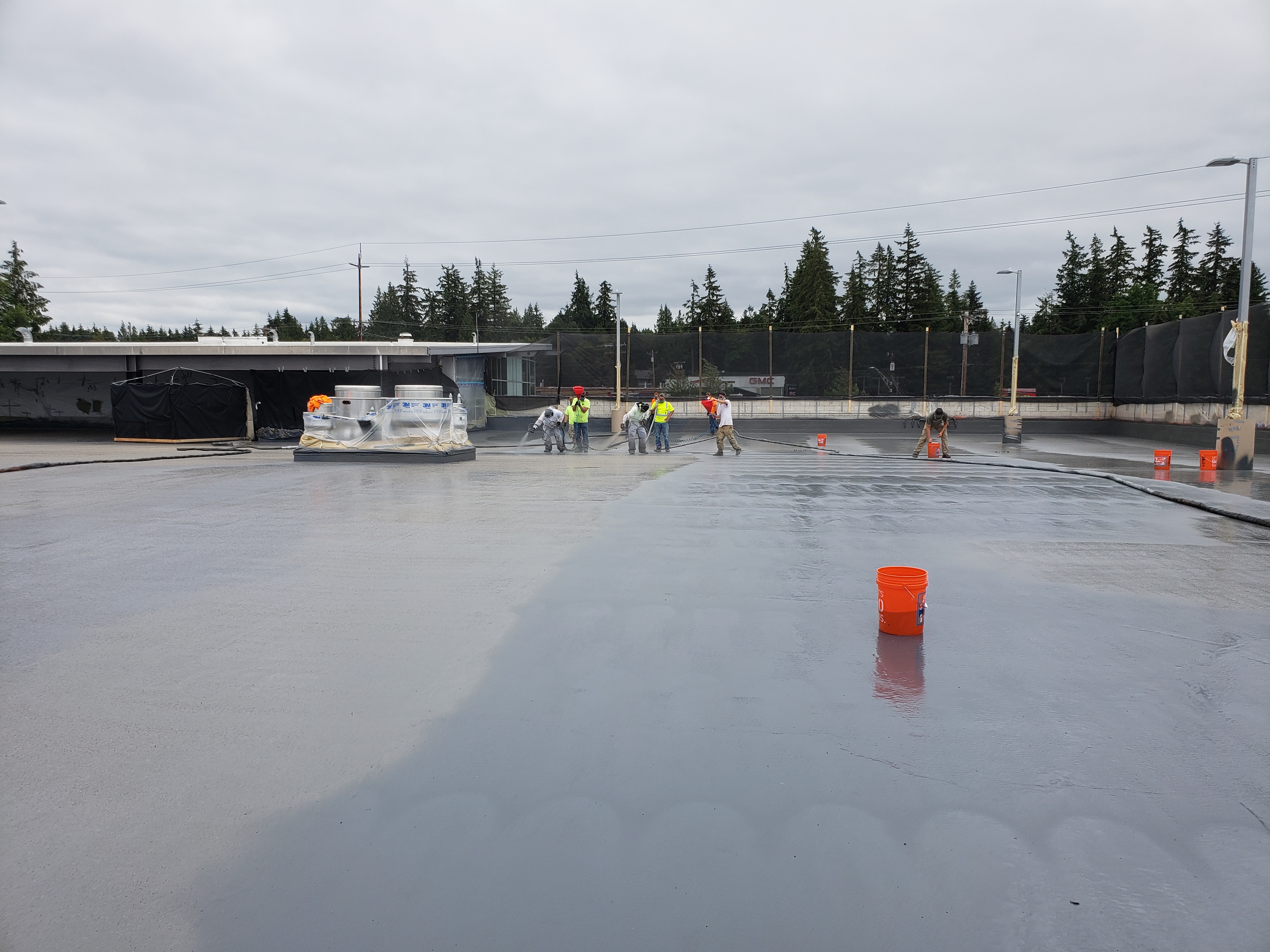
Travel Trailers, Campers & Park Models
The same products cover recreational units, and the problem is even more pronounced: an RV roof flexes constantly at highway speed, gets scraped by branches, and has more penetrations per square foot than a house roof — vents, A/C units, antennas, skylights, and racks.
Alasta Seal was developed with these roofs in mind. Park models and destination trailers sit in one place like a home but are built like an RV, which puts them squarely in this category too.
Spec: Super Orange Cleaner wash, remove failed lap sealant, 7001 Primer, Alasta Seal across the roof with a heavy stripe pass at every penetration flange and along both edge rails.
Other Things We Seal on the Same Visit
- Attached carports and awnings — usually the same metal, usually leaking at the same kind of seams
- Add-on rooms and Arizona rooms — where the addition meets the original home is a classic leak
- Roof-over structures — the second roof built above the original, with its own seams to seal
- Swamp cooler and A/C curbs — cut into the roof and sealed with whatever was on hand at the time
- Skylights and bubble vents — the flange, not the dome, is where the water gets in
- Storage sheds and utility buildings — small enough to add to the job for very little
- Porch and step canopies — light metal, exposed fasteners, easy win
- Park-wide programs — community owners sealing multiple homes in one mobilization
Not Sure What Kind of Roof You Have?
Take a photo from a ladder — you do not need to get on the roof — and send it with the approximate age of the home. We will identify it and tell you what it needs.
Send a PhotoGet My Roof Sealed
Tell us about your project and we will follow up with product details, technical data sheets, and pricing.