Trailer Home Roof Coating That Ends the Yearly Recoat
Mobile and manufactured home roofs leak in the same handful of places — the seams, the vent flanges, the edge trim, and the center joint on a double-wide. Alasta Seal is a flexible polyurea membrane made for exactly these roofs, applied over 7001 Primer after a Super Orange Cleaner wash. On metal roofs, OR-80SLM Silver Lining Membrane does the same job at commercial thickness.
Get My Roof SealedWhy This Is Different From What You Have Been Doing
No More Coating It Every Spring
Silver fibered aluminum coating is what most trailer home roofs have been getting for decades, and it works for about a season and a half. Each new layer goes on thinner and gets more brittle than the one under it. Alasta Seal is a flexible polyurea membrane, not a maintenance coating on a repeating schedule.
It Bends With the Home
A manufactured home roof is light, thin, and moves — in wind, on a hot afternoon, and every time the frame settles a little more. That flex is what cracks rigid coatings and pulls sealant out of seams. Polyurea stretches to three or four times its length and springs back instead of splitting.
One Piece Over Every Seam
The center joint on a double-wide, the end caps, the vent stacks, the swamp cooler curb, the edge trim — those are where your water is coming in, not through the middle of the roof. A sprayed membrane runs over all of them without a single break, so there is nothing left to re-caulk.
Cooler Inside on the Worst Days
A dark, aged trailer roof gets brutally hot, and there is very little between it and your ceiling. A light-colored membrane reflects instead of absorbing, which drops the roof surface temperature and takes real load off the air conditioning in summer.
Roofs We Seal
Single-wides, double-wides, park models, and the buildings that live alongside them.
- Rounded (bowstring) metal roofs
- Flat & low-slope metal roofs
- Double-wide center seams
- Rubber & membrane roofs
- Aged aluminized asphalt coatings
- Park model & tiny home roofs
- Travel trailer & camper roofs
- Attached carports & awnings
- Add-on rooms & Arizona rooms
- Storage sheds & skirting-level buildings
What Goes on Your Roof
Four products, in order. Skipping any of them is why the last coating did not hold.
You Already Know Where It Leaks
Almost everyone who calls us about a trailer home roof describes the same thing. A stain on the ceiling that appears after a hard rain and dries out again. It is over the hallway, or the back bedroom, or right down the middle of the home. Someone has been up there with a caulk tube. Someone else rolled on silver aluminum coating two or three summers ago. It helped, and then it did not.
Here is what is happening. Water is almost never coming through the middle of a roof panel — that part is fine. It is coming in at the joints:
- The center seam. On a double-wide, the two halves were joined on site and that joint has been working ever since. It is the single most common leak on manufactured housing.
- Vent stacks and roof jacks. Plumbing vents, range hoods, and furnace flues all have flanges sealed with something that dried out years ago.
- The edge trim. Where the roof meets the sidewall, the J-rail or drip edge is fastened with screws that have loosened and sealant that has hardened.
- Swamp coolers, A/C curbs, and skylights. Anything cut into the roof and sealed around.
- End caps and roof-to-wall transitions on add-on rooms and Arizona rooms.
Every one of those is a joint. Caulk is a temporary fix for a joint that is still moving. A sprayed membrane removes the joint from the equation by running continuously over the top of it — no edge, no lap, nothing to re-seal next spring.
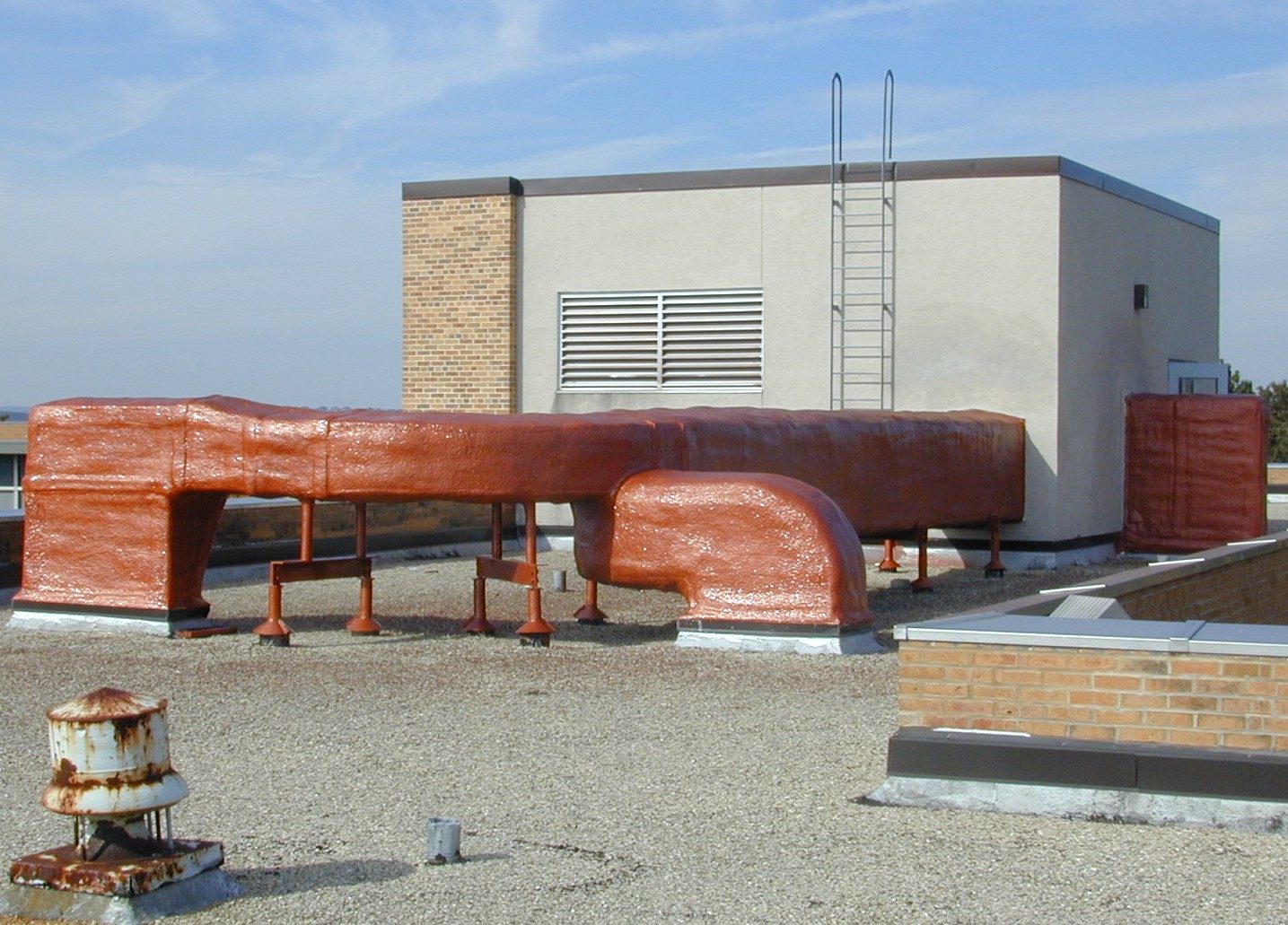
What a Job Looks Like
- Wash it with Super Orange Cleaner. Years of road film, chalk from old coatings, oxidation, and grime come off. This is not a formality — anything left on the roof is what the new membrane bonds to instead of the roof.
- Scrape off what is loose. Peeling aluminum coating, cracked tar patches, failed caulk. If it comes off with a putty knife, it was going to come off later anyway, taking the new roof with it.
- Fix the real problems. Backed-out screws, split vent boots, rusted-through spots, soft decking. A membrane is waterproofing, not carpentry.
- Prime with 7001. This is what makes the membrane stick to metal, to aged rubber, and to whatever silver coating is still up there — and it stops old asphalt from bleeding through and softening the new layer.
- Spray the details first. Center seam, vents, curbs, edge trim. Extra material where the leaks are.
- Spray the field. Alasta Seal, or OR-80SLM on a metal roof at 40–50 mil. It gels in seconds and is tack-free in under a minute, so the roof is protected almost immediately.
Most single-wides are a one-day job. Double-wides and homes with a lot of add-ons run one to two days, and the bulk of that is the cleaning and the repairs, not the spraying.
The Short Version
Being Straight With You About Two Things
This is not a do-it-yourself product. We wish it were, because we would sell more of it. Polyurea has to be sprayed through a plural-component machine with a heated hose that mixes two chemicals at exact pressure and temperature. Get the ratio wrong and the material never properly hardens — and there is no fixing it afterward. What we can do is put you in touch with a trained applicator in your area.
If your roof deck is rotten, coating it is throwing money away. Walk on the roof, or have someone walk it. If it feels soft or spongy underfoot, or if the ceiling inside is sagging, there is water damage in the structure that has to be repaired first. Sealing a wet roof traps the water and makes the rot worse, not better. We will tell you this on the phone rather than after the invoice.
If neither of those applies — the deck is solid and you just want the leaks to stop and the recoating to end — this is a very good fit for your home.
Tell Us About Your Roof
What kind of home, roughly how old, what the roof is made of, and where the stain is on the ceiling. Include your city and we will connect you with an applicator who works in your area — or ship material to your contractor if you already have one.
Get My Roof SealedGet My Roof Sealed
Tell us about your project and we will follow up with product details, technical data sheets, and pricing.
Frequently Asked Questions
Common Questions
Asked by homeowners, park managers, and the contractors who work on these roofs.
Will It Work on My Roof?
Can it go over the silver aluminum coating that is already up there?
Usually yes, after the loose material comes off. Anything peeling, blistered, or lifting has to be scraped back to something solid — the new membrane bonds to what it touches, so if that layer is on its way off the roof, so is your new roof. Over the sound remainder, 7001 Primer bonds to it and blocks the asphalt oils from bleeding up into the new membrane. On roofs with ten or fifteen years of built-up coating, expect more scraping.
What if there is already tar or roof cement patched all over it?
Very common, and manageable. Soft, gooey, or cracked patches get removed. Hard, well-stuck patches can generally stay and get primed over. The real question underneath is why they were put there — a patch marks a spot that was leaking, and if the cause was a backed-out fastener or a split seam it should be repaired properly before anything is sprayed.
How do I know if my roof is too far gone to coat?
Three tests. Does the roof feel soft or spongy when someone walks it? Is the ceiling inside sagging, stained in multiple places, or damp to the touch? Can you push a screwdriver through the metal anywhere? A yes to any of those means structural repair first. A membrane over a rotten deck seals the water in and makes it worse — and you will pay for the repair anyway, plus the wasted coating.
My roof does not leak yet. Is it worth doing anyway?
It is the best time to do it, honestly. A sound roof needs less scraping, less repair, and less material, so the job is cheaper. And the interior damage from a leak — ceiling panels, insulation, framing — routinely costs more than sealing the roof would have. If your home is fifteen years old and the seams have never been touched, you are in the window.
Cost & Doing the Work
Can I apply this myself?
No, and we would rather say so plainly than sell you something that will not work. Polyurea requires a plural-component proportioner with a heated hose that meters two chemicals at exact ratio, pressure, and temperature. Off-ratio material never develops its strength or its stretch, and there is no way to correct it after it is on the roof. Tell us your city and we will connect you with an applicator.
What does it cost compared to a new roof-over?
A roof-over — building a whole second roof structure above the existing one — is a much larger project involving framing, new metal, and often permits. Coating is a fraction of that and takes a day or two instead of a week. Against re-coating with aluminum every couple of years, polyurea costs more once and then stops costing. Send us the home size and roof type and we will give you a real number.
How long does the job take and do I need to move out?
A typical single-wide is one day. Double-wides and homes with add-ons run one to two. You do not need to leave — the work is entirely on the roof, and the material is tack-free within a minute of being sprayed. Expect noise from the equipment and some odor during application, and plan to keep windows closed that day.
Do you sell the material to contractors?
Yes. We ship Alasta Seal, OR-80SLM, 7001 Primer, and Super Orange Cleaner nationwide, and contractors and distributors get wholesale pricing. If you are a homeowner with a contractor already lined up, have them contact us directly — we will spec the job with them and ship to their shop.
Living With It Afterward
Will I have to recoat it every year like the aluminum coating?
No. That is the main reason to do this. Fibered aluminum and asphalt emulsion products are maintenance coatings — they are designed around a recoat cycle. Polyurea is a membrane at real thickness with 2,500 PSI tensile strength. Once it is on and properly bonded, the annual trip up the ladder with a pail is finished.
Will it make the home cooler in summer?
A light-colored membrane reflects rather than absorbs, which lowers the roof surface temperature noticeably. On a manufactured home that translates directly to the interior, because there is not much insulation between the roof and your ceiling. It is not a substitute for insulation, but it is a real and immediately noticeable difference on hot afternoons.
What happens if a branch gouges it?
It is repairable, and easily. An applicator abrades the damaged area, primes it, and sprays a patch of the same material — which bonds chemically to the original rather than sitting on top of it as a patch. Compared to repairing a torn rubber roof or a punctured metal panel, this is a straightforward fix.
Does the color fade over time?
Aromatic polyurea chalks and lightens gradually in direct sun. It is purely cosmetic — the waterproofing and the flexibility are unaffected. If long-term appearance matters to you, ask about an aliphatic topcoat that holds its color; on most manufactured home roofs, which nobody looks at from the ground, homeowners skip it.
Something Else on Your Mind?
Ask it plainly and you will get a plain answer, including "your roof needs repair before it needs coating" if that is the truth.
Ask a Question